Pages

Saturday, 8 May 2021

My Kaupapa

kaupapa


 This was my very first page of brainstorming for my Kaupapa. Through painting and research, I have developed my ideas to deeper and more meaningful pieces. 


And this I have developed my ideas further. Now, I need to consider about how I can make series and sequences with my Kaupapa using symbols, narrative, colours, subjects, techniques, etc. All my ideas lead to "love". I care about emotional and mental, the heart and mind. Because I believe that being conscious of your own self, being gentle with yourself, and expressing gratitude in everything makes life beautiful.  


Wednesday, 5 May 2021

Painting - Series and Sequences

This folio mainly used the colours red and blue and keeping the pieces dark. Using the main subject, a person, using red or blue. It always shows the back, the hands being trapped and helpless, the head or brain suffering from unbearable pain. The third panel shows the subject in a conformed room or space with endless space or limited space. The series of artwork can be seen because of its running theme with colour palette, subject matter and background.  Series of artworks need to link and work together but they don't have to be the same. They tell a story as you move along the panels and has pieces of artwork that work really well together, they have to be together to tell the complete story or for you to understand. Having all the pieces of artworks gives you the total story or purpose of the folio. 
 

Tuesday, 16 March 2021

First Baby Steps to Artwork

My Kaupapa is about reality of life, showing relationships/connections and love, and how we have limited time for these things on earth. The reality of life is a hard pill to swallow and slaps on the face, there is pain and sorrows but also there is joy and beauty in it. All these elements makes up each lives, seeing the colours of a rainbows on a grey sky after the rain, there is good and bad, and light and dark. These contrasts helps us see that there is life. I will be using contrast to show my kaupapa and other elements, too. 

Just like how I use negative spaces to show positive spaces. The blanks spaces of my painting, the negative spaces, are the dark spaces. 

These negative spaces perceives the darkness around the rose. The rose symbolising love, has darkness surrounding it. But the rose overcomes this darkness 'Love overcomes'. Within the rose, there are also negative spaces which displays how love can turn dark and has negative elements also. These dark spaces enables us to see that there is positive spaces. In love, we can see that there is bad because we know what is good. 

Bubbles give joy and awakens the our child-spirit. These bubbles are floating around in an empty space, representing lives in a given time. Bubbles don't last long, just like our life, we don't know when it's gonna pop, sometimes we decide to just pop it out. These bubbles are surrounded by negative space, and has also a negative space inside it. Underneath the white lines, is a space. Bubbles are fragile, so if life. But it is beautiful and enjoyable, the highlights on the bubbles shows that our lives has highlights, it goes around and also has shadows. These bubbles have different sizes because lives are all different, some last long but others don't. 


The ART OF PROCESS IN ART


I've started this painting but decided that the triangles on the background won't work how I want it to since I am only using one colour, white, and it shouldn't show any depth. I still want to use my negative spaces and with this, I can't show it much. 


I've developed another idea of geometrical triangles on the background to show the spikes and thorns that are part of the roses. These triangles are created by the white lines and they are filled with negative space, dark space only. The pain that comes with the rose, aka the pain that comes with love. 


Plan on Monday: 
-Paint realistic rose on a flat background of geometric triangles
-Come up with another thumbnail progressing from my ideas and finished paintings based on my kaupapa. If possible, start painting it. 
-Ask for feedbacks from Mrs Clemence


Monday, 15 February 2021

My Mood Board 2021 / Subject Matter and Kaupapa

 Mood Board - Level 3 Art Painting 


Notes

My brainstorm page

ideas page

notes from/about the artists


Subject Matter and Kaupapa

(Left) Dull, dark painting. The dark background makes it hard for the person to be clearly seen because the skin colour of the subject has the same dark tone. (Right) It uses bright, vivid colours where the subject can be clearly seen. 
Theme: Recognition of people. Left painting is harder to be recognised because of its colour tone of background and skin colour but the white coat shows it deserves to be recognised due to its position or actions while it was still alive. The white flower shows that the person is already dead. Right painting has a brighter colours which demonstrates how the subject is being clearly recognised with pride. The vivid colours and high contrast shows the bright life of the young person and the flower illustrates it's bright, blossoming future ahead. 

Left has a calm conquest over death and RIght expresses a painful, suffering death. Left painting used bright vivid colours while Right has monochromatic tones which sets negative mood/ambience of the whole setting, expressing so much sorrow and suffering. The background of the left painting is rich in life with waters and trees while the left painting has drought and dry land showing no life at all. 

(Left) It shows pride in the culture shown by the up straight posture of the bird and the designs on the bird's painting. 
(Right) It shows defeat, death, fallen, most likely in war. Colour depicts blood, fatality, and the stormy grey background shows a negative mood or atmosphere about the painting.  

Denotation and Connotation

Denotation is the subejct matter, what you can literally see with your physical eyes in the painting or picture as you look at it.

Connotation is the the theme or ideas behind the painting expressing beyond what eyes can see to illustrate the vision and thoughts of the artist. 

Thursday, 4 July 2019

Research: The South Island Robin

Use KWL to know where to start.

What I already know
The South Island Robin is native to New Zealand.

What I want to know

In this section, I formed 5 inquiry questions in high-order to help me know what to research and organise my gathered information. 


  • What do they look like?
  • What is their habitat?
  • What do they eat?
  • How do they breed?
  • Is their species safe?

Researching online can give us many information resources but we need to be discerning which is reliable or true. 

this section tells about the South Island Robin's physical appearance

Length: 18 cm
Weight: 35 g

A small songbird in which adult males have a dark grey-black head and upper body, brownish-black flight feathers and tail, and a sharply demarcated white to yellowish-white lower breast and belly; adult females have a light to dark grey upper body and a smaller, less distinctly demarcated breast-belly area. Adult birds are able to expose a small white spot of feathers above the base of the bill.

Habitat
Robins occur in mature forest, scrub, and exotic plantations, particularly those that are fairly mature with an open understorey. They seem to favour moist areas where there is an open understorey under a closed canopy on fertile soils. Habitats that tend to be shunned are those with widely scattered trees and where the ground is covered by grasses or sparse vegetation on stony, droughty soils.

Breeding
South Island robins start nesting in July, with the last clutches laid in December. The female builds the nest while her mate brings her food 2-3 times per hour. Only females incubate the 2-4 eggs; her mate calls her from the nest every 20 minutes or so to provide her with food. Both parents feed the nestlings. Nestlings leave the nest when about 3 weeks old, and continue to be fed by their parents for a further 5-6 weeks. If one fledgling is reared the male feeds it while the female builds a nest and incubates the next clutch. If there are two fledglings, each is usually fed by a different parent, and if three the male usually looks after two and the female one.

Food
While robins spend much time foraging on the ground, they also scan from perches for prey. Much of their diet consists of invertebrates, and large prey items include earthworms, cicadas, stick insects, tree weta and slugs. Slugs are wiped on the ground from side to side, presumably to get rid of slim, before being eaten. Robins also eat small ripe fruit in summer and autumn, particularly during drought when few soil-dwelling invertebrates are available.

source: http://nzbirdsonline.org.nz/species/south-island-robin (June 17, 2019)

This website used Wikipedia for their information. Other references are books from New Zealand. It uses words that are quite unfamiliar so I need to check it out. 

-----------------------------------------------------------------------------------------------------------------------

I need to research furthermore by using different websites and other types of resources to link the ideas and make it more reliable. 

I can use images to support the description of how they look like. 

File:070308 Stewart Island robin on Ulva.jpg


Image result for south island robin
source:http://nzbirdsonline.org.nz/sites/all/files/
1200575South_Island_Robin_20110820_Kaikoura_Hills_NZ.jpg

source: https://commons.wikimedia.org/wiki/File:
070308_Stewart_Island_robin_on_Ulva.jpg

Although in these pictures, I cannot determine whether the one on the image is a male or female bird. I can use the information I gathered to help me identify their gender however, it will not be accurate.  

--------------------------------------------------------------------------------------------------------------------

The breeding season runs from August to March with nest building beginning in July and the last clutches laid in December. Only the female incubates the two to four eggs, over an 18-day period with both parents feeding the nestlings.

Chicks leave the nest when about 19 days old but are fed by the parents for a further five to six weeks. A pair may produce two clutches each season; the male will feed the fledglings while the female builds another nest and incubates the next clutch.


There are few words in the texts I gathered that are quite unfamiliar to me. Some are also uncommon so I might try and put their definitions in here to help me and the readers understand the text more.

fledgeling - a young bird that has just fledged
fledge - develop wing feathers to be able to fly
clutches - tight grasp
cached - store away for future use
juveniles - young
monogamous having only one mate at a time

The texts I got from different sources have flaws in spellings and grammar. This affects its reliability.


--------------------------------------------------------------------------------------------------------------------

This paragraph shows a comparison between South Island Robins to other two birds that are commonly mistaken with each other. 
The South Island robin is a small passerine, 10–18 cm in length and weighing around 35 g. North Island robins do resemble both females and juveniles of the South Island robins, as well as all the Stewart Island robins, which can sometimes make it difficult to distinguish between the three. The females and juveniles within a particular group of robins look similar to each other, although newly independent juveniles may not yet have the more lightly coloured breast patch. However, North Island males are almost black with a white spot just above the beak as well as the greyish-white lower breast. Females and juveniles are greyer with more variable pale patches on their breasts and throats. South Island males are dark grey except for the distinct yellowish white lower chest, while females and juveniles are again lighter grey with a less distinct breast. Finally, Stewart Island robins look similar to North Island robins (males and females).

New Zealand robins are relatively long-lived; life-spans of at least 14 years have been recorded in the wild.

Breeding and interaction between mates
South Island robins are genetically monogamous, and extra-pair paternity is rare. As they do typically remain monogamous, are non-migratory, and remain on their breeding territories year-round, a male and female in one territory will compete for food resources during non-breeding times. Competition is reduced somewhat by slightly different foraging methods, however they can and will steal from their mate's cache if given the opportunity. Males do dominate females, and thus will aggressively exclude females from food, such that females will only access food sources when unattended by the males. During breeding season, the female is solely responsible for nest building and incubation, and the male will provide the female and the hatchlings with food.

South Island robins become sexually mature between six and 12 months of age. They begin their breeding season fairly early in August or September (Southern Hemisphere spring) and thus can make use of the winter's remaining food stores during this time. They build open-cup nests in tree-forks or inside tree cavities. Incubation lasts 18 days, and chicks leave the nest after 21 days. Five to 25 days after fledglings leave the nest, the pair may breed again. Modal clutch size is two eggs with the expected inverse correlation between size and number of eggs. Replacement clutches in the case of loss of eggs or nestlings to predation can be produced relatively rapidly, within 3–10 days.

Their food
Invertebrates, including earthworms, beetles, and other arthropods foraged from the leaf litter comprise most of the South Island robins' diet. Invertebrate prey may be cached whole or in portions. Single items are cached at separate sites. Prey is typically stored within 10 metres of where it was procured, even if the bird is outside its own territory. In the winter the primary cache is earthworms, while during the summer the trend is toward cicadas. South Island robins have a very good memory of their storage sites; a male was observed to empty as many as five consecutive caches before returning the stores to his mate during incubation. The birds have demonstrated an ability to differentiate and prioritise caches of varying sizes, up to 12 total items, without any training, which appears to be the highest recorded numerical competency of any wild animal. Because of its high metabolic rate, a robin might spend as much as 90% of its day foraging or storing during the winter. South Island robins have also been observed to eat berries on occasion, however these are not cached.

source: https://en.wikipedia.org/wiki/South_Island_robin (June 18, 2019)

This research process about South Islan Robin went well. Many online resources give enough information, however, I need to be discerning whether it is reliable or true. Using inquiry questions helped a lot because it serves as my guide to where my research will have to go. It is also quite frustrating to read so many texts but is useless at the end. I think I develop my skim, scan, close-reading skills in this activity. After skimming and scanning, I can easily determine whether  I can use it or not. 


Tuesday, 18 June 2019

Unfamiliar Text: Booklet

Pre-reading Activities

Write sentences using the specified words.

a. Organisms inherited their genes from their parent/s.
b. I got expelled from Hogwarts for violating the rules.
c. The children persuaded their teacher to have an early break.
d. A new police detective has been transferred to your station.
e. After saying those words, the atmosphere inside the room changed.
f. Our brave soldiers need to have complete armaments to protect our nation.
g. When taking pictures, girls love pouting their lips to pose.
h. She is working as your mother's apprentice in the clinic.
i. Cavalier Oliver Wood will escort the Princess.
j.  The Roman Catholic Church in your town is still deciding the holy orders before the festival.


Friendly - showing kindly interest and goodwill
Connotation: positive, good, warmth

Persuasion - the process of persuading someone to do something
                  -set of strong beliefs or opinions
Connotation: favour, fake, pressure, consequence

My first impression on the extract is that someone will persuade someone to do something that will result in a good thing because the title says Friendly Persuasion and based on the given list of words.

One thing that surprised me about the story was a character's sudden death.

The intended audience is the students. 
evidence to support my answer
"Alan was supposed to be grounded at home, but he'd managed to persuade his parents that he was repentant enough to be allowed a night out."

---------------------------------------------------------------------------------------------------------------------

Identifying the 'point of change' 

Identify which part paragraph we see the start of the point of change. 
In Paragraph 6. The first part of the text is telling the readers about Alan and his behaviours at school, however, when the Mini entered the scenario, ideas about Alan have changed.

How does this point of change help us understand the purpose of the text?
The author is trying to tell the readers something important at the end.

Author's purpose: think about the lesson the author is trying to convey. It doesn't always have to be a lesson, sometimes it can be the author is trying to persuade the reader to change their point of view about something or to inform the reader about something. 

If we don't learn from our previous mistakes, we are going into trouble.
*Alan got rejected from his previous school and got stood down again

Using the title to help you understand the author's purpose 

Why do you think the title is appropriate? (Friendly Persuasion)
Because the point of the text is about Alan's convincing friendly persuasion that lead to his death.

How does this relate to the author's attitude towards the characters in his story?
The point of change makes the title have more sense to the readers.

Write a different title for the story and explain why you chose this title. 
The Popular Guy, The Cool Kid, Alan's Mini?

How do the title and the point of change work together to get the author's purpose across the reader? 
The title gives the reader a quick hint about what the text will be about. However, the given title makes no sense at the beginning of the text but as it flows, the point of change will draw the main idea to the title.

Identifying how the text is communicated

Identify one metaphor and describe its significance

Find two examples of euphemism and explain what the more the direct meaning is. 

"Alan and his Mini were unrecognisable"

Putting it all together

Language feature from paragraph 2-4


Information Report: Kea

One of the Smartest Birds


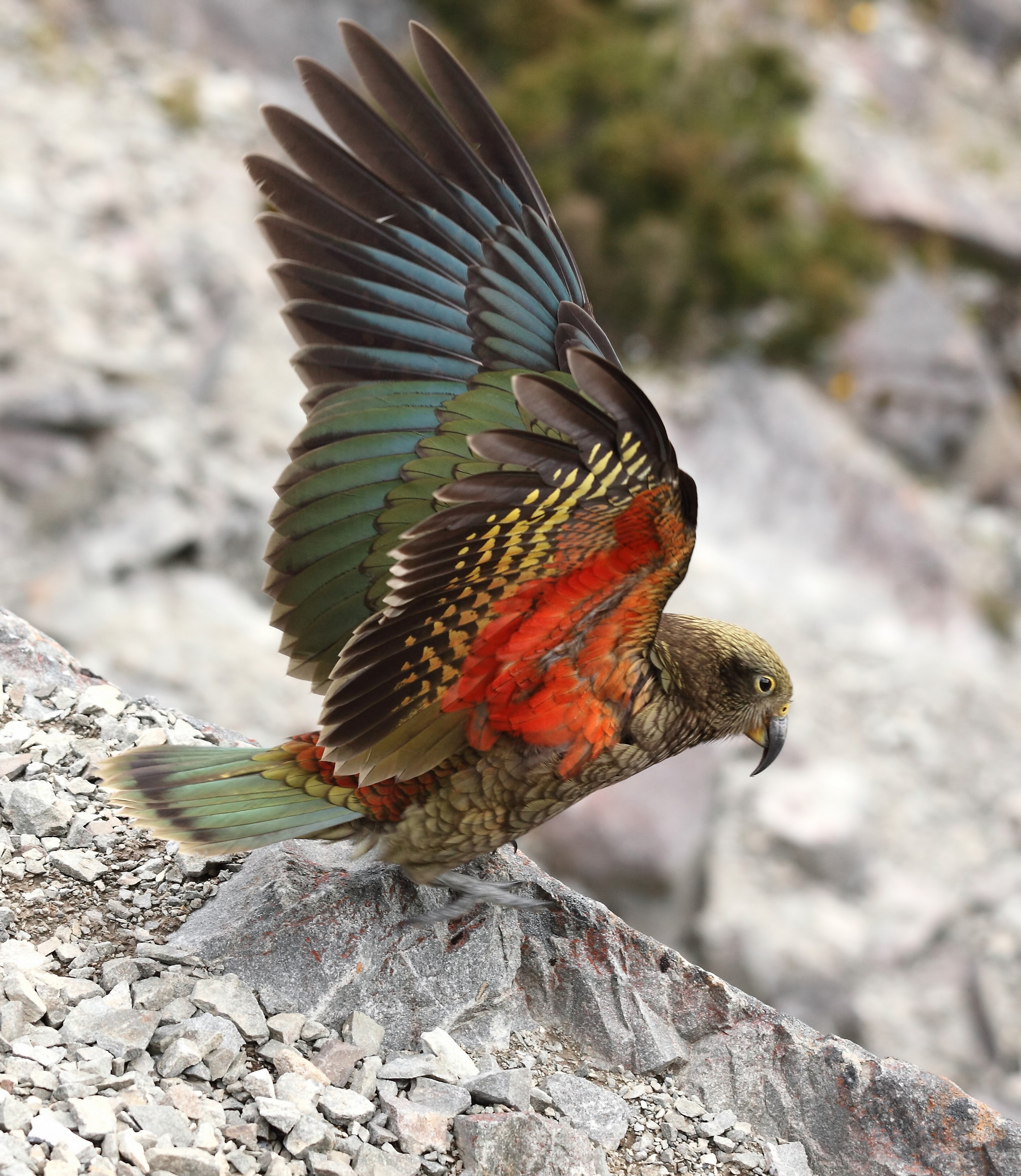
A New Zealand native bird, Kea is considered as one of the smartest birds in the world. It belongs to the large species of parrots that is also widely known for their intelligence.


Kea birds are covered with gradient olive green feathers. Underneath their wings are bright red and yellow colours. They weigh less than a kilo and grow a length of up to 50 cm. Despite their small mass, they have great strength. They use their feet, having 4 toes each, to grip and their hard curvy beaks to open or damage things.

Image result for kea

They are considered as wild animals and are very destructive. With their intelligence of a 3 or 4-year-old kid, these birds tend to destroy and steal for food. Cleverly, they would try opening bags with their beaks to get something interesting out of them and then fly away.

Originally, they came from the Southern Alps in New Zealand. They are alpine parrots. They live in high mountains and build their nests underneath a tree where they can lay 2-5 eggs. They eat bugs, insects and seeds so they don't necessarily have to hunt for food.

Image result for new zealand south island mapRelated image